Cat Body Language Cheat Sheet: Tails, Ears, Meows
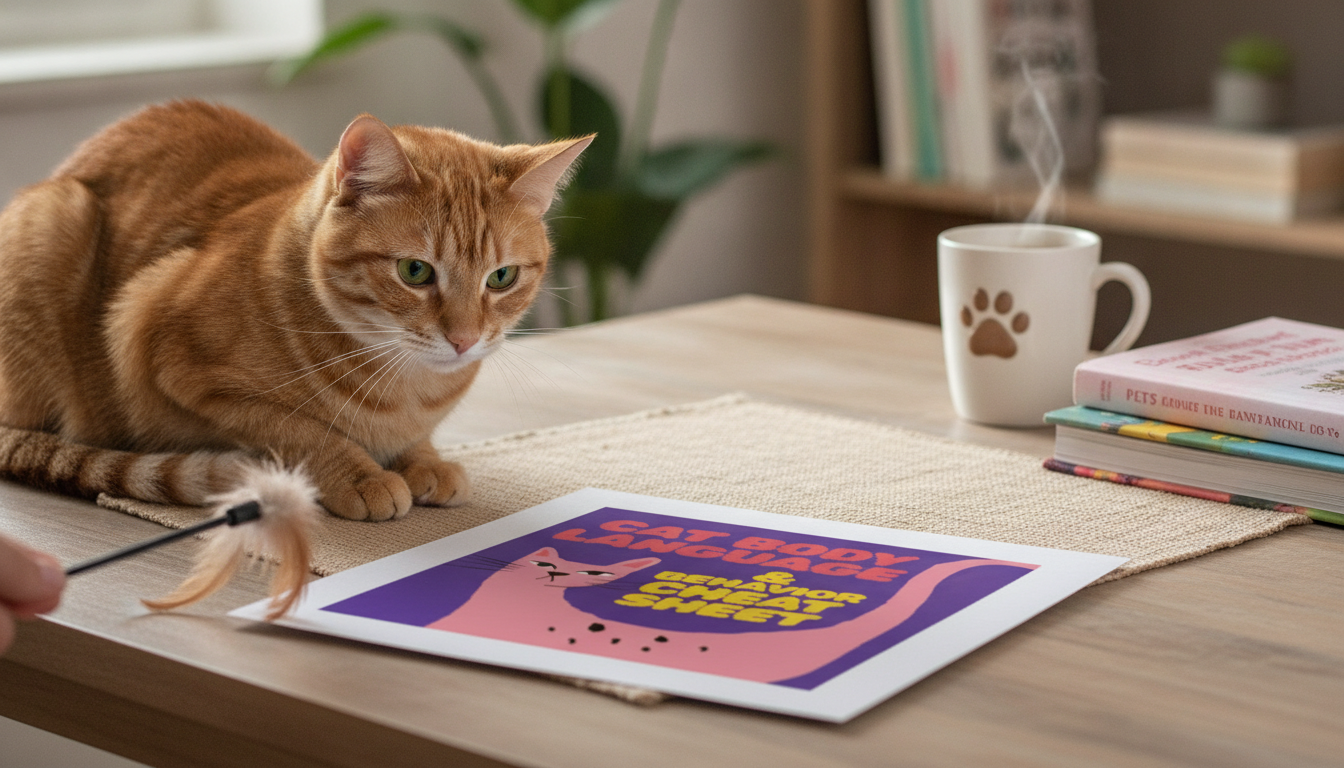
Cat Body Language & Behavior Cheat Sheet: Signals, Postures, and Meows
Cats communicate constantly through tail position, ear angle, eyes, posture, and vocal sounds. Having a quick-reference guide makes it easier to notice patterns, respond calmly, and prevent misunderstandings—especially during play, handling, introductions, and stressful changes at home. The goal isn’t to “decode” a cat perfectly every time; it’s to read the whole picture and choose a response that helps your cat feel safe.
How cats communicate at a glance
- Body language usually shows up before sound. Posture, ears, tail, and eyes can shift in seconds—often before a meow or growl happens.
- Single signals can fool you. Combine at least three cues (for example: ears + tail + body tension) before deciding what your cat needs.
- Context changes meaning. The same posture can look “playful” in a quiet living room but “stressed” at the vet or during a noisy gathering.
Quick cheat sheet: common signals and what to do
Use this as a starting point, then confirm with the situation (noise level, other pets nearby, recent changes, health). When you’re unsure, choose the least intrusive response: pause, give space, and let your cat re-approach. If you see sudden behavior changes like hiding, aggression, or litter box issues, consider pain or illness and contact a veterinarian.
Everyday cat signals and supportive responses
| Signal | What it can mean | Helpful response |
|---|---|---|
| Tail up with a relaxed tip | Friendly greeting, comfortable confidence | Offer a gentle hello; let the cat initiate contact |
| Tail puffed (bottlebrush) | Fear, arousal, feeling threatened | Increase distance; reduce noise; provide an exit route |
| Tail lashing or thumping | Overstimulated, irritated, conflicted | Stop petting/handling; switch to calm, low-pressure interaction |
| Ears forward | Curious, engaged, interested | Continue what’s working; reward calm behavior |
| Ears sideways (airplane ears) | Uncertain, uncomfortable, conflicted | Slow down; give space; watch for escalation |
| Ears flattened back | Fear, defensive aggression, pain | Do not reach in; create space; avoid cornering |
| Slow blink | Relaxed trust, social friendliness | Slow blink back; speak softly; avoid direct staring |
| Wide pupils + tense body | Stress, high arousal (play or fear) | Reduce stimulation; redirect to a toy if playful; offer hiding spots if fearful |
| Crouched low with body tucked | Anxious, defensive, trying to feel safe | Give a quiet zone; avoid looming; let the cat choose closeness |
| Rolling onto back (showing belly) | Trust or play invitation (not always a pet request) | Offer play with a wand toy; avoid belly rubs unless the cat clearly enjoys them |
| Kneading | Comfort, soothing, contentment | Provide a soft blanket; avoid interrupting unless claws are an issue |
| Hissing/growling | Clear “back off” warning; fear or pain | Stop interaction; remove triggers; reassess handling and environment |
Tail, ears, and eyes: the fast signals
- Tail position shows arousal and intent. An upright tail often signals friendliness and comfort. A low tail, tucked tail, or rapid whipping motion usually indicates fear, discomfort, or irritation.
- Ear angle shows attention and comfort. Forward ears are typically curious and engaged; sideways ears suggest uncertainty; pinned ears often mean the cat is scared, defensive, or in pain.
- Eyes communicate intensity. Soft lids and slow blinks are “safe” signals. A hard stare, fixed focus, or dilated pupils (especially with tension) can mean stress, fear, or intense play/predatory focus.
When you see mixed signals—like playful movement with pinned ears—assume the cat is conflicted and lower the pressure. Give extra space and switch to toy-based interaction instead of hands-on contact.
Posture and movement: relaxed, playful, stressed, or defensive
- Loose and curvy usually means comfortable. A relaxed cat often looks “soft”: weight evenly distributed, muscles not rigid, movements fluid.
- Stiff and frozen means high tension. Stiff legs, a low crouch that doesn’t shift, or a sudden pause can be a warning that the cat is overwhelmed.
- The sideways “Halloween cat” posture is distance-increasing. Arched back and puffed fur commonly come from fear and uncertainty; the cat is trying to look bigger to keep a threat away.
- Play can look intense, but has “breaks.” Healthy play often includes pauses, role-switching (chaser becomes chased), and ears that aren’t pinned for long periods. If one cat is constantly hiding, screaming, or unable to disengage, slow things down and separate when needed.
Meows and other sounds: what they often mean
For deeper behavior basics and stress-reduction tips, see resources from the American Association of Feline Practitioners (AAFP), International Cat Care, and the ASPCA.
Common mix-ups and how to avoid bites and scratches
Printable guide: keeping cues handy for everyday use
Shop printables and guides
- Cat Body Language & Behavior Cheat Sheet | Printable Cat Communication Guide | Learn Feline Signals, Postures & Meows
- Mindful Dating Red-Flag Checklist | Printable Dating Checklist for Emotional Safety & Boundaries | Spot Red Flags Early
FAQ
Why does a cat purr but also seem tense or hide?
Purring can mean comfort, but it can also be a self-soothing behavior during stress or pain. Check for body tension, crouching, reduced appetite, hiding, or sudden routine changes, and contact a veterinarian if the behavior is new, worsening, or paired with other signs of illness.
Is a cat showing its belly asking for a belly rub?
Often it’s a sign of trust or a play invitation, not necessarily a request to be touched. Try brief chin or cheek pets first, watch for tail lashing or ears turning back, and switch to a toy if your cat gets grabby.
What are the clearest signs a cat wants space?
Pinned ears, tail lashing, a stiff or frozen body, a hard stare with dilated pupils, and growling or hissing are strong “back off” cues. Pause immediately, give an exit route, lower noise and activity, and let your cat choose when to re-engage.











Leave a comment